Consumers

Helpful information for consumers of window shades.

Practical advice to help you make confident, informed decisions.

Mandatory Standards

Why Choose a WSAA Member?

If you are considering new blinds, shutters, curtains or awnings, choosing a WSAA Member ensures you are working with trusted professionals.

WSAA sets and promotes high standards of conduct and professionalism within the industry. WSAA Members deliver exceptional service, expert product knowledge and superior quality while adhering to strict safety regulations and ethical business practices.

By choosing a WSAA Member, you support Australian manufacturing, local jobs, and the wider economy. Each product is custom made to measure for a precise fit, reliable function, and lasting performance, unlike mass-produced imports that are often resized, poorly fitted, and less durable.

All WSAA Members undergo a thorough vetting process that includes eligibility checks, verified trading references and a signed commitment to the WSAA Code of Ethics. This ensures you can be confident in the quality and integrity of your chosen supplier.

WSAA Members Are Expected to:

Abide by the WSAA Code of Ethics

Comply with relevant Australian Standards

Employ trained installation technicians

Honour warranties and meet Australian Consumer Law requirements

Maintain appropriate insurance

Adhere to child safety regulations

Support Australian jobs and industry

Consumers Should:

Look for the ‘WSAA Certified Member’ certificate in-store

Look for the WSAA Member logo on business signage, marketing material and websites

Do’s and Don’ts

Key Points to Consider Before Buying

Do

Inspect product samples before purchasing

Request a written quote and ask about the consultant’s experience

Discuss your needs including insulation, privacy, functionality and design

Check product warranty and whether the business is likely to honour it

Review the company’s website and read independent feedback

Get at least two quotes and confirm that installation is included

Clarify the brand of product being supplied

Understand your rights under Australian Consumer Law

Confirm delivery timeframes

Ensure your quote includes GST

Confirm the business is a WSAA Member

Don’t

Deal with businesses that are not properly registered

Accept unrealistic discounts or promotional offers at face value

Cave to high-pressure or aggressive sales tactics

Pay large deposits without formal documentation

Pay the full amount upfront — a reasonable deposit is standard

Accept verbal-only quotes

External Shading

Fire Safety, Building Codes and Regulatory Requirements

In 2018, the Australian Building Codes Board (ABCB) introduced amendments to the National Construction Code (NCC) to improve fire safety in Australian high-rise buildings.

These amendments removed an exemption clause that applied to awnings and blinds and added stringent requirements, particularly for installations above ground level. These amendments now require that any ‘Ancillary Element’, (which include an awning, sunshade, canopy, blind, shading hood, etc), must be ‘non-combustible’.

As a result, these amendments by the ABCB have impacted the installation of external shading in certain building types when the external shading is to be installed above ground level. The specific building types affected are Class 2 to 9 buildings which include multi-unit residential buildings. See NCC Building Classifications for detailed definitions of the building classifications.

Note that there are no requirements if the installation is for a Class 1 Building (i.e.: a single dwelling being a detached house; or one of a group of attached dwellings being a town house, row house or the like).

Architects for new projects and, homeowners and body corporates for existing projects can however obtain a ‘Performance Solution’ as a means of demonstrating compliance with the NCC regulations. To discuss obtaining a Performance Solution from the WSAA for your particular project, please reach out to a WSAA member: Member Directory

Non-Conforming Products

Non-Conforming Products

Non-conforming building products can create significant compliance, safety and performance risks for both property owners and industry professionals. It is important that shading products used in building projects meet relevant legal, safety and installation requirements.

Industry guidance has been published by the Queensland Building and Construction Commission (QBCC) to help suppliers, specifiers and installers understand the compliance obligations that apply to awnings, sunshades, canopies, blinds and other external shading products. This guidance is intended to support the correct selection, supply and installation of products in line with current building and product regulations.

Awning, Sunshade, Canopy, Blind or Shading Hood and Non-conforming Building Products Fact Sheet
QBCC Licence Information Tool
QBCC Website

Consumers and businesses should also be aware that licensing requirements may apply to the installation of external window shading products, particularly where the value of works exceeds certain thresholds. Checking the relevant licensing and compliance obligations before any work begins is an important step.

Further regulatory information is available through official fact sheets, FAQs, licensing guidance and non-conforming building product codes of practice issued by the relevant state authorities.

Industry Guidelines

Industry Guideline Fit for Purpose

These guidelines help set clear expectations around product quality, performance, installation, and natural material variations. They provide practical reference points for members, retailers, and customers when assessing window shading products and understanding what is considered reasonable within the industry.

WSAA ‘Fit for Purpose’ Statement

  • WSAA members’ products are specifically designed to be used for the recommended purpose and are guaranteed to be supplied free of defects.
  • ‘Free of Defects’ means that the product meets its published description and specification, and is homogeneous in appearance after allowance for minor variance that is inherent on the processes of production.
  • The product has performed satisfactorily when used in its design context in all of the climatic extremes experienced throughout Australia.
  • ‘Satisfactorily’ means with continued but gradually diminished utility over its expected life, due to the unavoidable effects of Ultra Violet Radiation and weathering, such as colour variation, strength loss and dimensional change.
  • ‘Expected life’ is at least the period covered by warranty, provided the product is installed properly, and cleaned and maintained as recommended.

Industry Guideline for Faults

WSAA INDUSTRY GUIDELINE

WSAA has prepared an Industry Guideline to assist manufacturers and retailers deal with customer queries regarding the final product. This guideline is in no way a substitute for legal advice. Businesses are bound by legislation such as Australian Consumer Law and Australian Standards such as AS2663.2-1999, Textiles – Fabrics for window furnishings – Coated curtain fabrics.

This Guideline is one that is accepted by the industry and should be seen as a “reasonable” test for looking at a perceived fault.

Recommended Industry Guideline for Faults:

The acceptable guideline for imperfections, marks, dots etc. on completed product is:

  • If an imperfection is visible with the naked eye in natural daylight at a distance of 1.2 metres, it is not acceptable.
  • If an imperfection is not visible with the naked eye in natural daylight at a distance of 1.2 metres it is acceptable.

Minor colour variations may occur between any colour swatch supplied and the order received, as the colour swatch is a guide only, this includes paint, stain and lacquers.

This Guideline does not override any rights under Australian Consumer Law

References:

Standards Australia AS 2663.2-1999, Textiles – Fabrics for window furnishings – Coated curtain fabrics. Available from SAI Global.
The Australian Consumer Law (ACL)

Industry Guideline for Plantation Shutters

WSAA has prepared an Industry Guideline regarding Plantation Shutters.

Plantation Shutters are an appealing window and door dressing, considered to be at the pinnacle of window covering types. They are manufactured from robust materials, and are considered to be fine furniture that typically increases the value of a home.

Compared to other window covering types, the robust nature of Plantation Shutters also makes them substantially heavier, and when gravity combines with a Hinged or Bi-fold installation method, it is usual for slight dropping or sagging to occur to the panels when operated out of their closed position.

The louvres of the shutter are used to control the light entering a room, but where access to the window is required for opening or cleaning the window, the shutter panels can be swung out of the way. It is expected that the panel will need to be lifted or assisted back into the window frame when closing, to support the panel and avoid damage to the window frame. To maintain structural integrity, shutter panels should be returned to their closed position promptly.

Shutters are not expected to provide complete blockout, and are designed primarily to allow the user to easily and efficiently control light and airflow.

Industry Guideline for Awnings

WSAA INDUSTRY GUIDELINE

WSAA has prepared an Industry Guideline regarding Awnings.

Important Note: Acrylic Fabrics Common Irregularities

The nature of the fabric is that, regardless of all the attention that is paid during manufacturing and preparation, you might note some natural “imperfections” after your awning is installed. These small irregularities in your fabric are perfectly normal and nothing to worry about.

Waffelbuilding or Veining – Subsequent to handling during fabrication and assembly, acrylic fabrics treated with resins containing fluoride may show “veining” visible against the sunlight caused by an optical effect (differences in the refractions of light).

White Lines or Folds – Subsequent to handling during fabrication and assembly, acrylic fabrics treated with resins containing fluoride may show small white traces that appear on the fabric due to the stiffness that is caused by the fluoride treatment. These lines are particularly visible in light fabrics as they are held up against the light.

Waviness or Corrugation in the seam/weld area – As the fabric rolls up along the roller tube on the awning the seams will roll up with more accumulated material than the areas surrounding it. This difference in thickness may cause the fabric to wrinkle slightly around the seams. This may affect one seam but not the seam next to it.

These small irregularities in your fabric are normal and nothing to worry about. On the other hand, if you notice the slightest problem concerning the major qualities of your fabric within its warranty please let the supplier know.

Why Choose a WSAA Member

If you are considering new blinds, shutters or awnings, choosing a WSAA Member ensures you are working with trusted professionals.

The Window Shading Association of Victoria (WSAA) sets and promotes high standards of conduct and professionalism within the industry. WSAA Members deliver exceptional service, expert product knowledge and superior quality while adhering to strict safety regulations and ethical business practices.

By working with a WSAA Member, you are also supporting Australian manufacturing, protecting local jobs and strengthening the local economy. Each product is custom made to measure, ensuring the perfect fit, functionality and long term performance for your space. In contrast, mass produced imports are often resized, poorly fitted and not designed for durability.

All WSAA Members undergo a thorough vetting process that includes eligibility checks, verified trading references and a signed commitment to the WSAA Code of Ethics. This ensures you can be confident in the quality and integrity of your chosen supplier.

WSAA Members Are Expected to:

Abide by the WSAA Code of Ethics

Comply with relevant Australian Standards

Employ trained installation technicians

Honour warranties and meet Australian Consumer Law requirements

Maintain appropriate insurance

Adhere to child safety regulations

Support Australian jobs and industry

Consumers Should:

Look for the ‘WSAA Certified Member’ certificate in-store

Look for the WSAA Member logo on business signage, marketing material and websites

Do’s and Don’ts

Key Points to Consider Before Buying

Do

Inspect product samples before purchasing

Request a written quote and ask about the consultant’s experience

Discuss your needs including insulation, privacy, functionality and design

Check product warranty and whether the business is likely to honour it

Review the company’s website and read independent feedback

Get at least two quotes and confirm that installation is included

Clarify the brand of product being supplied

Understand your rights under Australian Consumer Law

Confirm delivery timeframes

Ensure your quote includes GST

Confirm the business is a WSAA Member

Don’t

Avoid businesses that are not properly registered

Be cautious of unrealistic discounts or promotional offers

Be alert to high-pressure or aggressive sales tactics

Do not pay large deposits without formal documentation

Never pay the full amount upfront — pay a reasonable deposit

Avoid accepting verbal-only quotes

External Shading

Fire Safety, Building Codes and Regulatory Requirements

Fire Safety, Building Codes and Regulatory Requirements

In 2018, the Australian Building Codes Board (ABCB) introduced amendments to the National Construction Code (NCC) to improve fire safety in Australian high-rise buildings.

These amendments removed an exemption clause that applied to awnings and blinds and added stringent requirements, particularly for installations above ground level. These amendments now require that any ‘Ancillary Element’, (which include an awning, sunshade, canopy, blind, shading hood, etc), must be ‘non-combustible’.

As a result, these amendments by the ABCB have impacted the installation of external shading in certain building types when the external shading is to be installed above ground level. The specific building types affected are Class 2 to 9 buildings which include multi-unit residential buildings. See NCC Building Classifications for detailed definitions of the building classifications.

Note that there are no requirements if the installation is for a Class 1 Building (i.e.: a single dwelling being a detached house; or one of a group of attached dwellings being a town house, row house or the like).

Architects for new projects and, homeowners and body corporates for existing projects can however obtain a ‘Performance Solution’ as a means of demonstrating compliance with the NCC regulations. To discuss obtaining a Performance Solution from the WSAA for your particular project, please reach out to a WSAA member: Member Directory

Non-Conforming Products

Non-conforming building products can create significant compliance, safety and performance risks for both property owners and industry professionals. It is important that shading products used in building projects meet relevant legal, safety and installation requirements.

Industry guidance has been published to help suppliers, specifiers and installers understand the compliance obligations that apply to awnings, sunshades, canopies, blinds and other external shading products. This guidance is intended to support the correct selection, supply and installation of products in line with current building and product regulations.

Consumers and businesses should also be aware that licensing requirements may apply to the installation of external window shading products, particularly where the value of works exceeds certain thresholds. Checking the relevant licensing and compliance obligations before any work begins is an important step.

Further regulatory information is available through official fact sheets, FAQs, licensing guidance and non-conforming building product codes of practice issued by the relevant state authorities.

Consumer Compaints

The Window Shading Association of Australia is an industry representative body and as such we are not in a position to resolve consumer complaints directly.

Please note that WSAA cannot provide consumers with legal advice. The WSAA is not a regulatory body and has no role in admonishing manufacturers for issues regarding customer service, product installation, etc.

There are a number of Consumer Protection Agencies which may be able to assist you in taking your complaint further. The details are:

Access Canberra

NSW Fair Trading

NT Consumer Affairs

Office of Fair Trading Queensland

SA Office of Consumer and Business Services

Tasmanian Consumer Affairs & Fair Trading

Consumer Affairs Victoria

WA Consumer Protection

Industry Guidelines

Industry Guideline Fit for Purpose

WSAA ‘Fit for Purpose’ Statement

WSAA members’ products are specifically designed to be used for the recommended purpose and are guaranteed to be supplied free of defects. ‘Free of Defects’ means that the product meets its published description and specification, and is homogeneous in appearance after allowance for minor variance that is inherent on the processes of production.

The product has performed satisfactorily when used in its design context in all of the climatic extremes experienced throughout Australia. ‘Satisfactorily’ means with continued but gradually diminished utility over its expected life, due to the unavoidable effects of Ultra Violet Radiation and weathering, such as colour variation, strength loss and dimensional change.

‘Expected life’ is at least the period covered by warranty, provided the product is installed properly, and cleaned and maintained as recommended.

Industry Guideline for Faults

WSAA members’ products are specifically designed to be used for the recommended purpose and are guaranteed to be supplied free of defects. ‘Free of Defects’ means that the product meets its published description and specification, and is homogeneous in appearance after allowance for minor variance that is inherent on the processes of production.

The product has performed satisfactorily when used in its design context in all of the climatic extremes experienced throughout Australia. ‘Satisfactorily’ means with continued but gradually diminished utility over its expected life, due to the unavoidable effects of Ultra Violet Radiation and weathering, such as colour variation, strength loss and dimensional change.

‘Expected life’ is at least the period covered by warranty, provided the product is installed properly, and cleaned and maintained as recommended.

Industry Guideline for Plantation Shutters

WSAA members’ products are specifically designed to be used for the recommended purpose and are guaranteed to be supplied free of defects. ‘Free of Defects’ means that the product meets its published description and specification, and is homogeneous in appearance after allowance for minor variance that is inherent on the processes of production.

The product has performed satisfactorily when used in its design context in all of the climatic extremes experienced throughout Australia. ‘Satisfactorily’ means with continued but gradually diminished utility over its expected life, due to the unavoidable effects of Ultra Violet Radiation and weathering, such as colour variation, strength loss and dimensional change.

‘Expected life’ is at least the period covered by warranty, provided the product is installed properly, and cleaned and maintained as recommended.

Industry Guideline for Awnings

WSAA members’ products are specifically designed to be used for the recommended purpose and are guaranteed to be supplied free of defects. ‘Free of Defects’ means that the product meets its published description and specification, and is homogeneous in appearance after allowance for minor variance that is inherent on the processes of production.

The product has performed satisfactorily when used in its design context in all of the climatic extremes experienced throughout Australia. ‘Satisfactorily’ means with continued but gradually diminished utility over its expected life, due to the unavoidable effects of Ultra Violet Radiation and weathering, such as colour variation, strength loss and dimensional change.

‘Expected life’ is at least the period covered by warranty, provided the product is installed properly, and cleaned and maintained as recommended.

Why Choose a WSAA Member?

When investing in new blinds, shutters, curtains, or awnings, peace of mind is essential. Here is why you should look for the WSAA member logo:

  • Verified Professionals: Every member undergoes strict vetting, including reference checks and a commitment to our Code of Ethics.
  • Custom Quality: Enjoy made-to-measure products that fit perfectly and last longer—avoiding the issues of ill-fitting, mass-produced imports.
  • Support Local: Choosing a member means supporting Australian manufacturing, local jobs, and our economy.
  • Safety First: Our members adhere to the highest safety regulations and professional standards.

WSAA Members Are Expected to:

Abide by the WSAA Code of Ethics

Comply with relevant Australian Standards

Employ trained installation technicians

Honour warranties and meet Australian Consumer Law requirements

Maintain appropriate insurance

Adhere to child safety regulations

Support Australian jobs and industry

Consumers Should:

Look for the ‘WSAA Certified Member’ certificate in-store

Look for the WSAA Member logo on business signage, marketing material and websites

Child Safety

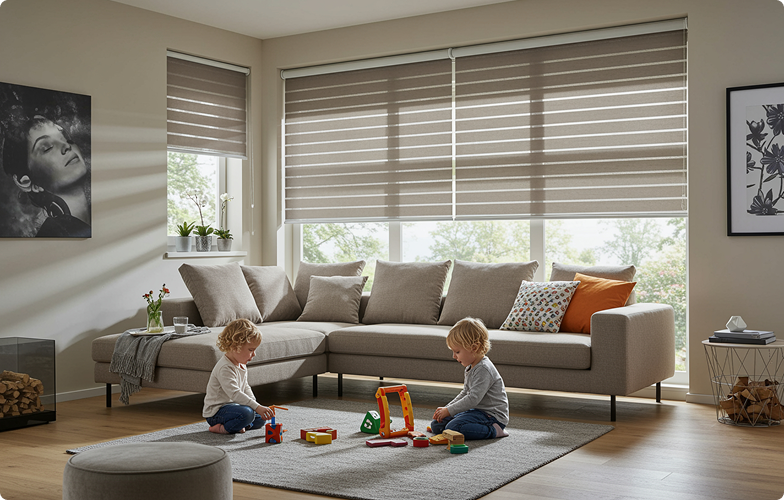
WSAA promotes safety in all settings where children may be present.

If your blinds have cords or chains that form a loop, they must be installed in a way that keeps them out of reach of babies and young children.

Australian law requires that all internal corded window coverings comply with mandatory safety standards. This includes safety labels, secure installation instructions, and appropriate warnings on product packaging.
Mandatory Standards

Connect with a WSAA certified business

Use the WSAA Member Directory to search for a certified member in your area. Members are located across Australia and service residential, commercial and large-scale projects.